Cummins Highway reconstruction is among the City’s major projects completed this year, alongside citywide street lighting upgrades, modernization of Boston’s parking meter system, roadway resurfacing, and neighborhood safety improvements.
BOSTON – Tuesday, November 17, 2026 – Press Release – Mayor Michelle Wu today announced the completion of major infrastructure projects and key milestones from Boston’s 2026 construction season, highlighting the City’s continued investment in safer, more accessible streets. Key accomplishments include a $28 million investment in Cummins Highway, record-setting achievements in roadway resurfacing, ADA-compliant curb ramp reconstruction, and citywide street lighting upgrades, along with parking meter modernization and Bluebikes expansion.
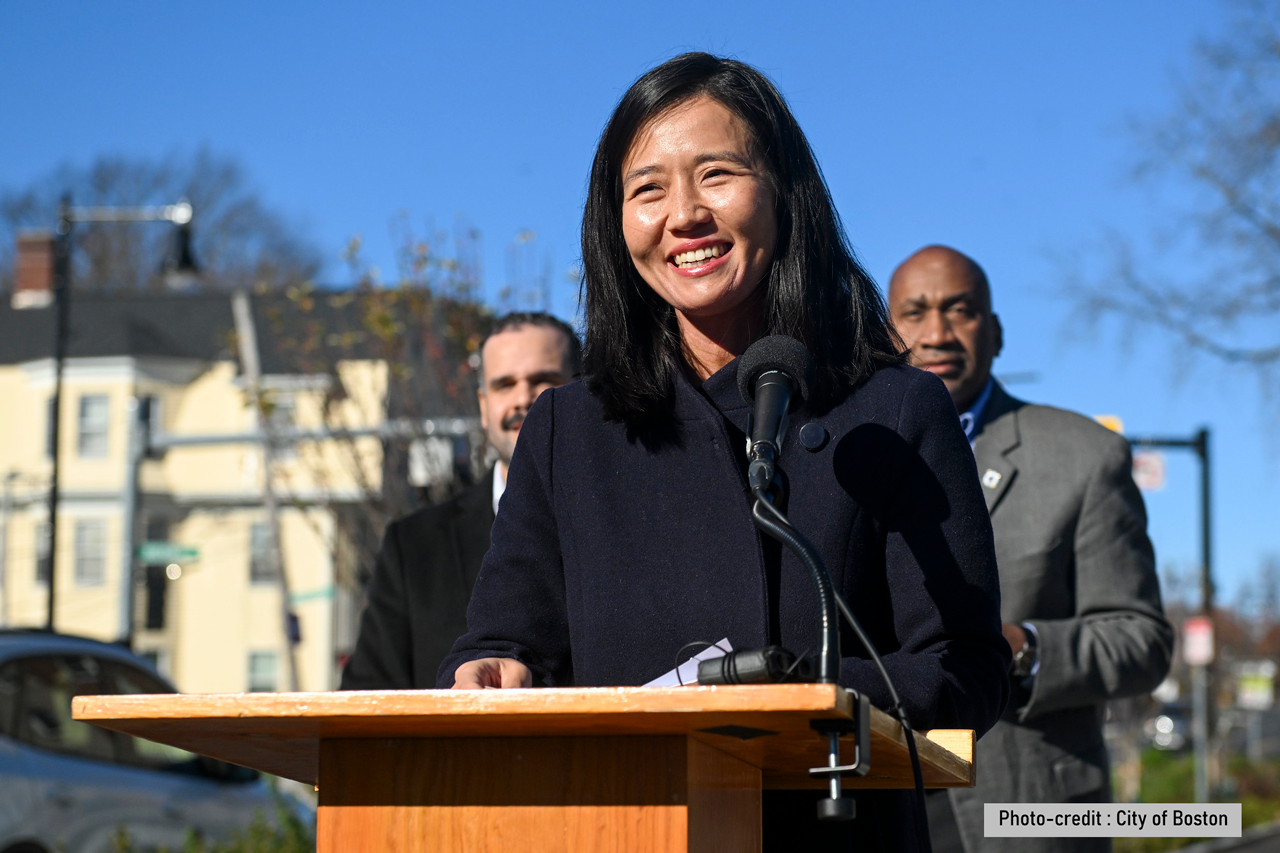
“From transformative projects like the reconstruction of Cummins Highway, to the everyday city services residents rely on, delivering for our neighborhoods means making investments that people can see and feel in their daily lives,” said Mayor Michelle Wu. “Every pothole filled, streetlight upgraded, and street resurfaced helps residents get where they need to go safely and reliably. These investments, big and small, make our streets and neighborhoods better places to live, work, and travel, while improving quality of life for residents across the city.”
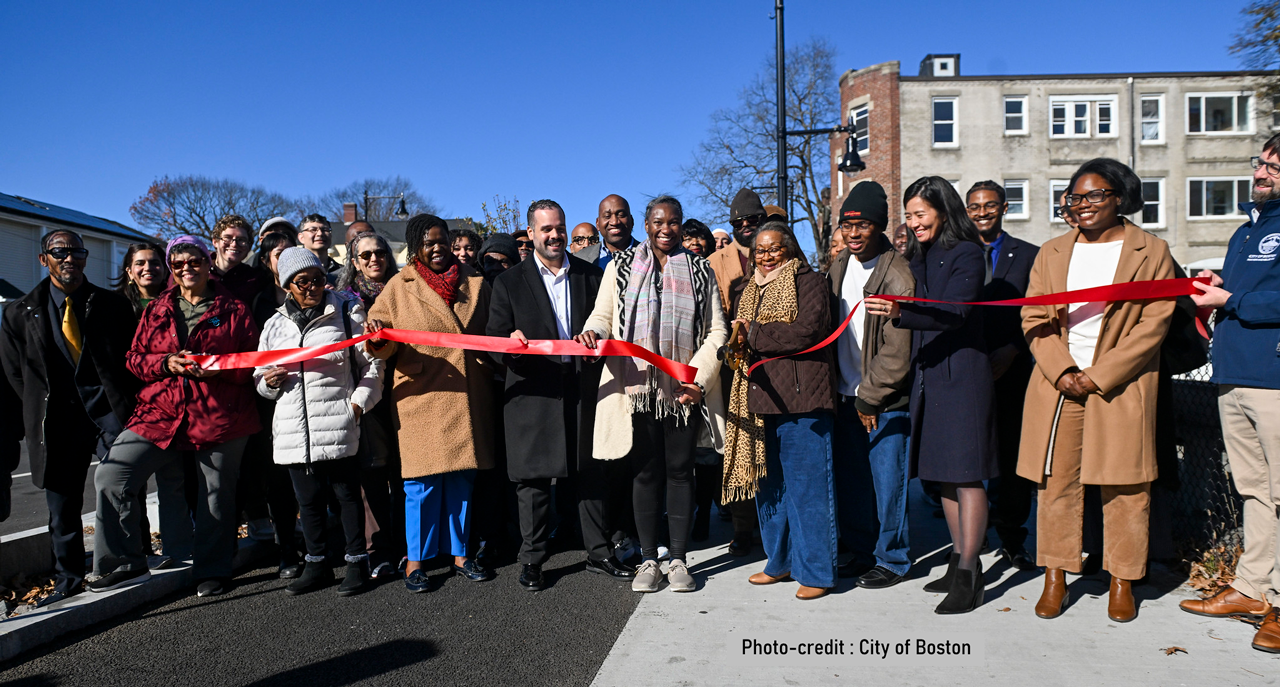
As part of the City of Boston’s work to deliver safer streets and expanded transportation options, the Cummins Highway Project in Mattapan was completed this fall. Stretching from Fairway Street to the intersection of Harvard Street and Wood Avenue, the project represented a significant neighborhood investment that improved pedestrian and roadway safety, enhanced connectivity, and strengthened the roadway’s overall functionality. McCourt Construction served as the project’s general contractor.
“I am so excited to see Cummins Highway get the infrastructure updates it deserves for safe transportation not only for cars, but for buses, bikes, and pedestrians,” said City Councilor Enrique Pepen. “For too long, drivers treated Cummins like a highway and not the neighborhood connector it is. This area is long overdue for this investment for safer commutes and connections and I am grateful to the Streets Cabinet for listening to the community and bringing it to fruition.”
“Thank you to Mayor Wu, Interim Chief of Streets Chris Osgood and the entire Streets Cabinet for seeing this project through to the finish line”, said State Representative Russell Holmes. “These improvements deliver on the promises made to the community that drivers, bus riders, bikers and pedestrians will all be able to share the road safely”
“The completion of the Cummins Highway reconstruction marks an important investment in the Mattapan community and the residents who rely on this roadway every day,” said State Representative Brandy Fluker-Reid (D-Mattapan). “Safe and accessible streets are essential to ensuring that all of our neighbors, whether commuting via car, wheelchair, bike, or pedestrian, can commute with confidence. Investments like this reflect our shared commitment to improving transportation infrastructure, strengthening neighborhood connectivity, and ensuring that communities like Mattapan receive the attention and resources they deserve. I am grateful to Mayor Wu and the City of Boston for their partnership and dedication to making our streets safer and more accessible for all.”
Prior to the reconstruction of Cummins Highway, nearly 30 percent of drivers traveled at speeds of 35 MPH or higher. The street’s wide, four-lane design created conditions that made speeding easier and contributed to a history of serious crashes, including two fatalities since 2015.
The project delivered new sidewalks and curb ramps, upgraded street lighting and traffic signals, roadway resurfacing, and utility upgrades to better support the street’s family-friendly, residential character. Additional features included safer and more accessible crosswalks, sidewalk-level bike lanes, improved bus stops, new street trees, and green infrastructure designed to better manage stormwater. A new roundabout was also constructed at the previously problematic three-way intersection at Greenfield Road, allowing traffic to flow from all directions while encouraging slower speeds.
The improvements have delivered measurable safety benefits. Post-construction data shows that the percentage of drivers traveling 35 MPH or faster dropped from 30 percent in 2018 to just 7 percent in 2026. Together, these improvements create a safer and more welcoming corridor that better serves Mattapan residents, commuters, pedestrians, cyclists, and everyone traveling through the neighborhood.
In addition to Cummins Highway, other significant projects that have been substantially completed, are currently underway, or are in the design phase include:
Completed Projects:
- Lost Village Transportation Safety Improvements: The project delivered comprehensive traffic-calming improvements throughout the Lost Village neighborhood in Charlestown, with a particular focus on mitigating the impacts of cut-through traffic in the area. Funded by the Massachusetts Gaming Commission, the improvements included the reconstruction of multiple intersections, sidewalks, and accessible curb ramps, roadway resurfacing, tree planting, and traffic signal upgrades.
- Harrison Ave (Ink Block): The reconstruction of Harrison Avenue between Herald Street and East Berkeley Street improved safety and accessibility through rebuilt ADA-compliant curb ramps, wider sidewalks, pedestrian islands, high-visibility crosswalks, and updated signal timing that provides pedestrians with additional crossing time. Additional improvements include resurfaced roadways, one-way separated bike lanes in both directions, new street trees, permeable paving, upgraded lighting, and the removal of the existing concrete median. The project also includes improvements to the Harrison Avenue Bridge between Marginal Street and Herald Street, strengthening connections to the surrounding transportation network and creating a more seamless corridor for all users.
- Thoreau Path: The Thoreau Path project restored a vital pedestrian connection within Boston’s West End neighborhood, enhancing accessibility, safety, and the overall pedestrian experience. Improvements included the full reconstruction of an accessible concrete pathway, enhanced upgraded lighting to improve visibility and pedestrian safety.
- Reddy Ave: The Reddy Avenue project included roadway reclamation, the installation of new sidewalk edgestones, reconstruction of sidewalks with new concrete in place of deteriorated asphalt, installation of above-ground street lighting, and planting of new street trees. The upgrades strengthen neighborhood infrastructure and improve the safety, functionality, and appearance of the street.
Projects Under Construction:
- Ellis Elementary School Safe Routes to School: The MassDOT grant-funded project will provide for the construction of traffic calming at six intersections, such as curb extensions, green infrastructure, and raised intersections in the Garrison Trotter neighborhood of Roxbury. The Safe Routes to School program works directly with schools to create safer streets and conditions for children to get to school safely.
- Jones Avenue Neighborhood Street Improvements: This project will deliver comprehensive improvements to streets and sidewalks on Jones Avenue, Ballou Avenue, and surrounding streets, including the reconstruction of two intersections to enhance traffic flow and simplify turning movements. Additionally, it will expand pedestrian sidewalks and incorporate green infrastructure to improve stormwater management. Construction is scheduled to be completed in 2027.
- Lower Roxbury Neighborhood Safety Improvements: This American Rescue Plan Act (ARPA) funded project will make streets safer by improving visibility, slowing traffic, and making crossings easier. Changes include clear corners to reduce sightline blockages, raised crosswalks and curb extensions to slow cars and shorten crossing distances, and crossing islands to give pedestrians a safe midpoint. Signal timing updates and redesigned “T” intersections further reduce conflicts and improve safety, while contraflow bike lanes expand safe cycling access on one-way streets. Construction is scheduled to be completed in Spring 2027.
- A Street, Congress Street, and Sleeper Street: After years of planning, design, and community engagement, the Congress Street project in the Fort Point neighborhood broke ground in January 2026. Improvements on A Street were substantially completed in June including sidewalk expansion and reconstruction, ramp reconstruction, resurfacing, and striping. Final elements, such as street lighting upgrades, will be installed during the 2027 construction season. Sleeper Street upgrades are underway with the conversion to one-way vehicle traffic, full depth reconstruction of the roadway, and sidewalk expansion on the southeast side complete. Temporary conditions on Sleeper Street will remain through the Winter until completion in the Spring of 2027 ahead of the Congress Street reconstruction.
Projects In Design:
- Rutherford Ave/Sullivan Square Redesign Project Update: The City of Boston reached a major milestone in May 2026 with the submission of the project’s 25% design plans to MassDOT, advancing the project toward its next phase while helping maintain its schedule and funding. The City has also continued making progress on key permitting processes. Following an extensive round of community engagement in spring 2026, the Streets Cabinet plans to return to the community by the end of the year to share project updates, provide information on next steps, and ensure residents remain informed as the project advances.
- Andrew Square Safety Project: To advance this grant-funded project, the project team focused this year on evaluating data and working with the community to understand existing intersection challenges and develop initial design concepts. The team held two major public meetings, and completed four stakeholder focus groups with civic leaders, community organizations, institutional partners, and MBTA bus operators to better understand key concerns and priorities. Feedback from all engagement activities is now being incorporated into the next phases of design this fall and winter.
- Bennington/Saratoga Safety Project: To advance this grant-funded project, the project team held multiple community meetings and completed existing conditions analyses to gather community input on intersection challenges and priorities. Feedback from community members, civic leaders, community organizations, and institutional partners helped shape initial design concepts. The team is continuing to collect feedback online to inform the next phase of design.
- Wood Avenue Safety Improvements: Plans are underway to redesign Wood Avenue, a residential street connecting Cummins Highway to the north and River Street to the south. The project will focus on creating a safer, more accessible street by reducing traffic speeds and adding and improving pedestrian crossings.Construction is anticipated to begin in spring 2027
The Public Works Department continued its commitment to improving neighborhood streets, building on last year’s record-setting accomplishments with another historic year of infrastructure and essential city service accomplishments. In 2025, the Department set records by resurfacing 50 miles of roadway and rebuilding 1,723 ADA-compliant curb ramps. In 2026, the Department surpassed both milestones, resurfacing 51 miles of roadway and rebuilding 1,946 ADA-compliant curb ramps, while also filling 5,860 potholes and replacing 7,582 street lighting fixtures.
The lighting upgrades represent nearly three times the 2,483 fixtures replaced in all of 2025 and the highest annual total recorded since 2016. The City’s Street Lighting Division completed this work at approximately one-third the cost of outside contractors, accelerating improvements along major transportation corridors, in business districts, and on residential streets throughout the City.
In addition to these projects, Boston is making long-term investments in street safety through its Better Buffers Initiative, which replaces temporary plastic flexposts with durable, cast-in-place concrete barriers. These permanent barriers have been installed along Congress Street and Washington Street in Downtown Boston, as well as Hyde Park Avenue, providing more lasting protection for pedestrians, cyclists, and other vulnerable road users.
“These accomplishments demonstrate the City’s ongoing commitment to maintaining, upgrading, and improving Boston’s transportation infrastructure while responding to the unique needs of our neighborhoods,” said Interim Chief of Streets Chris Osgood. “I’m proud of all the hard work our teams are doing to make meaningful improvements across the city. These efforts would not be possible without the dedication, expertise, and commitment of our hardworking staff, who work tirelessly every day to deliver for our residents.”
This construction season, the Boston Transportation Department (BTD) Markings Team completed more than 60 miles of crosswalks and 26 miles of double-yellow center lines. The BTD Signal Shop responded to 3,365 traffic signal repair calls in FY26 in addition to carrying out updates across multiple intersections. Signal updates consist of replacing signal bases, shafts, pedestrian crosswalk housings, and signal housings. Controllers are the equipment used within signal “cabinets” to control the signal timing. The BTD Sign Shop had installed 5,078 signs citywide this year, as of October 2026.
The City also completed a major upgrade to Boston’s parking infrastructure, replacing more than 5,600 outdated parking meters with 1,000 new, modernized meters across several neighborhoods. The project represents a significant investment in improving Boston’s parking infrastructure and makes it easier for residents and visitors to pay for parking. The new pay-by-plate meters offer multiple payment options, including credit and debit cards, coins, and the ParkBoston app, as well as English and Spanish language options. By upgrading equipment and streamlining the payment process, the City has delivered a more convenient, efficient, and modern parking experience while continuing to improve the management of Boston’s streets and curb space.
Along with improving parking and curbside access, Boston is also investing in more ways for residents to get around. In 2026, the City expanded and upgraded its Bluebikes network, adding 16 new stations, replacing 33 existing stations with brand-new equipment, and adding 780 new e-bikes to the fleet. With e-bikes now making up one-third of the systemwide fleet, these improvements make bike share more accessible and reliable, giving residents more convenient and affordable options for commuting, running errands, connecting to public transportation, and exploring their neighborhoods.