
New initiative builds on universal free school meals to increase breakfast participation, support families and bring more local foods into schools
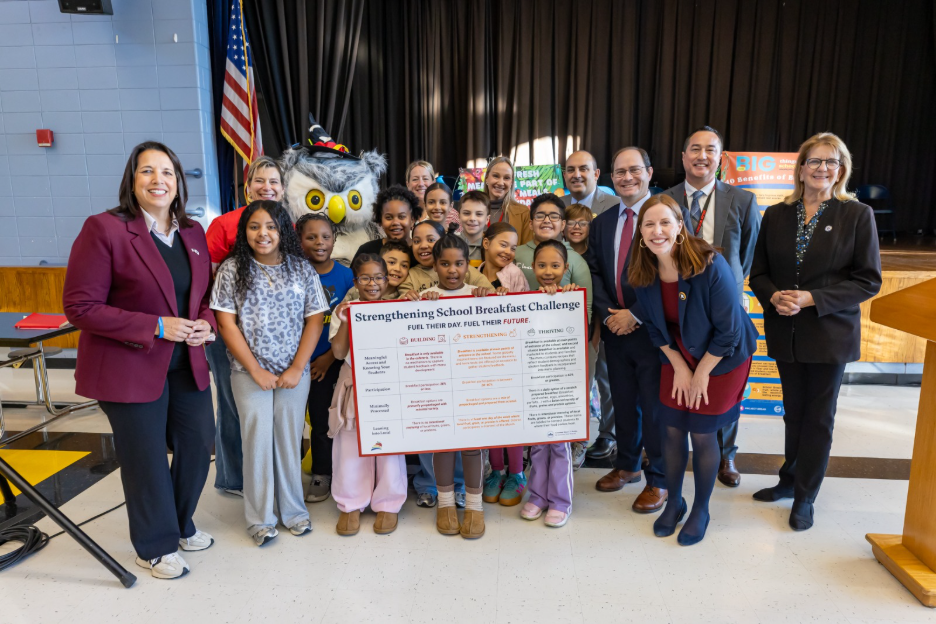
SALEM – Governor Maura Healey today announced the Strengthening School Breakfast Challenge, a new initiative to help more Massachusetts students start their school day with a healthy breakfast. The challenge encourages schools to expand access to nutritious breakfast options, increase student participation and incorporate more locally grown foods into school meals.
Through the challenge, the Governor Healey is encouraging schools to reach at least 60 percent participation in school breakfast programs by making breakfast more accessible and appealing to students. Strategies include offering breakfast at main school entrances, providing students with a second opportunity to eat breakfast during the school day, and promoting these options to students and families. Schools are also encouraged to incorporate locally grown fruits, grains and proteins, expand scratch cooking, and develop menus that reflect student preferences and feedback.
“Every student deserves to start their school day with a healthy meal, and every family deserves a little breathing room in their grocery budget,” said Governor Maura Healey. “We made school meals free for every student in Massachusetts because no child should have to worry about being hungry in the classroom. Now, we’re building on that progress by challenging schools to make breakfast easier to access, more appealing to students and filled with nutritious, locally grown foods. This is about helping kids succeed, saving families money and supporting our local farmers and food producers.”
“We know that students learn better when they start the day with a nutritious breakfast, but too many kids are still missing out on this important meal,” said Lieutenant Governor Kim Driscoll. “Our Strengthening School Breakfast Challenge is about finding creative ways to reach more students, whether that’s offering breakfast where kids enter the building, giving them a second chance to eat or serving fresh, locally sourced foods that reflect what students actually want to eat. We’re excited to see schools build on what’s working and make breakfast a part of every student’s day.”
The challenge builds on Governor Healey’s historic investments to make healthy food more affordable and accessible for Massachusetts families, including making school breakfast and lunch free for all students. While more students are eating school breakfast, participation continues to lag behind school lunch. In fall 2025, an average of 291,792 students ate school breakfast each day, compared to 588,654 students who ate school lunch.
The Strengthening School Breakfast Challenge advances recommendations from Governor Healey’s Anti-Hunger Task Force to increase school breakfast participation and explore efforts to expand scratch cooking and incorporate more locally grown foods into school meals.
“As a former superintendent, I know how important healthy school breakfast is for student learning and helping families afford groceries. Schools across Massachusetts have made progress incorporating more local products and engaging students in menu planning, but participation remains too low. Building off of free school meals, we are launching this Challenge to encourage more districts to make breakfast part of the regular day,” said Secretary of Education Steve Zrike.
“We want children to start their day ready for school, and that includes having access to a nutritious breakfast,” said Elementary and Secondary Education Commissioner Pedro Martinez. “The Strengthening School Breakfast Challenge is one way the administration is raising awareness of free school meals and the importance of breakfast. We encourage families to take advantage of free school breakfast to help students prepare for a full day of learning each day.”
“We are proud to join in partnering with schools across the state to make healthy, locally grown food an everyday reality for our students, and our farmers and food producers stand ready to feed the next generation,” said Massachusetts Department of Agricultural Resources (MDAR) Commissioner Ashley Randle. “This challenge creates a vital bridge between Massachusetts farms and school cafeterias. By integrating fresh, scratch-prepared local ingredients into school breakfasts, we are not only providing students with the high-quality nutrition they need to thrive in the classroom, but we are also reinvesting directly back into our local communities and agricultural economy.”
The administration is collaborating with Project Bread, New England Dairy and the Eos Foundation to provide schools with resources, technical assistance and funding opportunities to strengthen their breakfast programs.
Project Bread provides free resources and services to school meal providers, including one-on-one technical assistance, outreach strategies, promotional materials, tools to evaluate changes to breakfast menus and service models, and information about grant opportunities. These resources help schools identify barriers to breakfast participation and develop strategies to reach more students.
“When breakfast is accessible to every child, we’re building a stronger, healthier Massachusetts for everyone. Project Bread works with school districts to remove the barriers between kids and the meals they need to thrive, so that every child has a fair chance to succeed in school and in life regardless of their family’s circumstances. We are thrilled to join the administration in launching the School Breakfast Challenge and strengthening school breakfast programs throughout the state, so every student can start each day ready to learn,” said Erin McAleer, President & CEO, Project Bread.
The administration has also created a new partnership with Project Bread to help more child care and afterschool programs access federal funding to provide healthy meals and snacks to kids through outreach, technical assistance, trainings and more.
New England Dairy offers tools and resources to help Massachusetts schools enhance their breakfast programs. From lower-added sugar breakfast recipes to breakfast promotion toolkits, and funding, schools will find options to help build awareness, expand breakfast program offerings, and increase student participation.
“School breakfast is more than a meal; it’s an investment in students’ health, learning, and long‑term success. When children start their day with nutritious foods, they’re better prepared to focus and thrive. Research shows that children who participate in school breakfast are more likely to perform better academically, have improved memory and concentration, maintain a healthy weight, and consume more essential nutrients. Thanks to the support of dairy farmers, New England Dairy partners with Massachusetts schools to increase breakfast access, expand menu innovation, improve milk quality, and ensure every child has the fuel they need to learn and grow,” said Hilary Walentuk, MS, RD, LDN, Manager, Nutrition Partnerships; New England Dairy.
The Eos Foundation offers grants of up to $20,000 per school and hands-on technical assistance to help districts launch or expand Breakfast in the Classroom programs. Funding supports equipment, operational expenses and incentives to make breakfast part of the school day, with the goal of reaching at least 80 percent of students each morning.
“No child should start the school day hungry, especially in a state where school meals are free for every student,” said Andrea Silbert, President of the Eos Foundation. “We know that Breakfast in the Classroom works. Schools that make breakfast part of the school day typically feed 80 percent or more of their students every morning, reaching far more children than when breakfast is served before school starts. We applaud Governor Healey for challenging districts to do more, and we want school leaders to know they don’t have to do it alone. Eos is ready to help with funding, technical assistance, and the experience we’ve gained working with schools across Massachusetts.”
“Starting the day with a healthy breakfast means kids have better grades and less trips to the nurse. Studies have shown us this. And if a good breakfast equals student success, there’s never been any question in my mind that all students should have access to a nutritious first meal of the day,” said Senate President Karen E. Spilka. “Making school breakfasts free was one of my proudest votes. I’m excited to see the steps the Healey-Driscoll Administration is taking to increase participation.”
“Food insecurity is a pervasive issue for students and families in the Commonwealth, and I’m thrilled the Healey-Driscoll administration is focusing on this issue with their fun and engaging ‘School Breakfast Challenge’,” said State Senator Michael J. Rodrigues, Chair of the Senate Committee on Ways and Means. “No student should go to school hungry, and studies have clearly shown that proper nutrition directly leads to better productivity and a more conducive learning environment. It’s great to see that Ocean Spray in my district is participating in this highly beneficial program!”
The challenge also builds on the administration’s efforts to strengthen partnerships between Massachusetts schools and local food producers. Recently, the administration announced a new partnership with Ocean Spray Cranberries, Inc. to bring reduced-sugar dried cranberries made exclusively from Massachusetts-grown cranberries to school cafeterias. The administration has also invested more than $4 million through the Massachusetts Farming Reinforces Education and Student Health (MA FRESH) grant program to help schools and early education programs grow and purchase local foods and educate students and staff about the food system.
When Massachusetts made universal free school meals permanent, it required all schools participating in the federal National School Lunch Program to also provide breakfast for their students. Under state law, schools where at least 60 percent of students are eligible for free or reduced-price meals must offer breakfast after the start of the instructional day. Schools can meet this requirement through a variety of models, including breakfast in the classroom, grab-and-go options and second-chance breakfast in the cafeteria. The administration continues to work with districts to identify approaches that best meet the needs of their students.
Governor Healey remains committed to working with the Legislature, schools, nonprofits and food assistance organizations to address hunger and make nutritious food more affordable for Massachusetts families. The Fiscal Year 2027 budget signed by Governor Healey includes $338 million in investments to address hunger and strengthen nutrition programs across the state.
Statements of Support
Dominick Pangallo, Mayor of Salem:
“Salem is dedicated to ensuring every child has reliable access to healthy, locally sourced, and culturally relevant food options. That commitment is only possible thanks to incredible partners in this life-changing work – locally here in Salem, but also our state leadership in the Healey-Driscoll administration. Governor Healey, Lt. Governor Driscoll, and their team know that when local food systems, including those in our schools, are strong, families save money on groceries, local economies and food producers thrive, and our kids get the healthy start that they deserve. The Strengthening School Breakfast Challenge is a continuation of that record of leadership on this vital issue and we’re thrilled to be a part of it!”
Tommy Welch, Superintendent, Salem Public Schools:
“In Salem, we’re making breakfast more accessible while serving delicious meals prepared with care and locally sourced ingredients. When we make breakfast easier to access, more students participate. At one Salem elementary school, moving breakfast into the classroom increased participation from 42 percent to 90 percent. We’re excited to build on that progress through the School Breakfast Challenge, bringing high-quality meals to more students and helping them start the day ready to learn.”
Carl Howell, Greater Boston Food Bank President and CEO:
“Thank you, Governor Healey and Lieutenant Governor Driscoll, for taking a stand against hunger by helping to ensure every kid can start their day fed and ready to learn. Right now, with recent federal cuts to SNAP and the high cost of living, more families are struggling to put food on the table. Every day, moms and dads are forced to make impossible choices about how to care for themselves and their loved ones. This is the kind of leadership we need to ensure every child in Massachusetts can thrive, parents get the help they need, and our communities can prosper.”
Marty Martinez, President and CEO, United Way of Massachusetts Bay:
“Ensuring all children have access to essential needs is foundational to how students learn and thrive in the classroom. The Healey-Driscoll Administration’s Strengthening School Breakfasts Challenge builds on the Governor’s Anti-Hunger Task Force recommendations to increase participation and encourage local partnerships that best meet the needs of local students and families. At a time when our region’s safety net is under unprecedented strain, expanding access to school breakfast programs can reduce food insecurity, ease pressure on family budgets and help provide children with the support they need to succeed.”
Alexa Downs, Vice President, School Nutrition Association of Massachusetts:
“Serving breakfast to the students of Massachusetts that not only nourishes them to support their education, but provides locally sourced ingredients to enhance the flavor and nutrition of their first meal of the day is an honor of school nutrition professionals that we are proud to achieve.”