Key data-informed strategies identified to shape the work ahead
BOSTON – November 20, 2026 – Mayor Michelle Wu today released the 2026 Vision Zero Action Plan update, a comprehensive roadmap detailing the City’s next steps to eliminate serious injuries and fatal traffic crashes on Boston’s streets.
Marking over a decade since Boston became the first municipality in Massachusetts to adopt Vision Zero, the report and updated plan highlights progress, identifies persistent challenges and data gaps, and sets priorities to make our streets safer for everyone. Organized around three core pillars—streets, vehicles, and people—the plan outlines strategies to reduce dangerous driving, prevent crashes, and better protect people traveling throughout the City.
“Over the last decade, Boston has made meaningful progress in redesigning our streets to prevent serious crashes,” said Mayor Michelle Wu. “Our work continues as we build the systems to do more, faster and more effectively, so that every resident can get around our city safely and comfortably.”
The 2026 Vision Zero Action Plan outlines several key strategies to improve street safety across Boston, including:
- Reducing speeding on major roadways: Building on the updated High Injury Network analysis, prioritize safety improvements on high-crash, multi-lane roads where redesigned roadways and streets projects have demonstrated results.
- Prioritizing traffic calming near family zones: Focusing street safety investments on the streets that children and families use to access key neighborhood destinations, such as schools, parks, community centers, and libraries.
- Leveraging annual state-of-good-repair investment programs to implement cost-effective safety improvements at scale: Using annual roadway resurfacing, streetlighting, pedestrian curb ramp, and other repair and maintenance programs to effectively implement safety and mobility improvements, including on high crash roadways and intersections.
- Improving parking enforcement and delivering effective curb management using new tools and technologies: Leveraging new tools to improve enforcement and compliance, including advocating for automated parking enforcement and piloting the use of bike patrols.
- Addressing the root causes of serious pedestrian crashes: Recognizing that while fewer crashes happen after dark, they are about four times as likely to be fatal, we will upgrade street lighting in key locations across our neighborhoods to support nighttime safety while expanding the use of design tools to improve visibility, reduce conflicts, and slow speeds at the intersections where pedestrians are most frequently injured.
- Tracking e-bike and scooter crashes: Partnering with Boston EMS to continue expanding the information available on e-bike and scooter-related crashes, helping to inform safety efforts and future planning.
- Developing policies for safe, sustainable trucking operations: Working with the business community and other stakeholders to explore and pilot sustainable freight policies, potentially including time-of-day delivery restrictions and strategic designation of truck routes and loading zones.
Boston has seen improvements in traffic safety since 2015. According to the report, citywide injury crashes reported by EMS have fallen by approximately 20%, reducing emergency medical responses for pedestrians, bicyclists, and motorists by roughly 860 incidents per year. Fatal crashes have also decreased by 25%.
These reductions directly correlate with the City’s infrastructure investments, particularly in multimodal roadway redesigns and neighborhood safety projects. Projects that created separated space for dedicated bus and bike lanes improved street safety for all travelers, with the largest reduction in crashes for pedestrians: on streets with lane or roadway narrowing projects, across 52 project locations, pedestrian injury crashes dropped from 230 to 118, a 49% reduction compared to a 33% reduction on control streets.
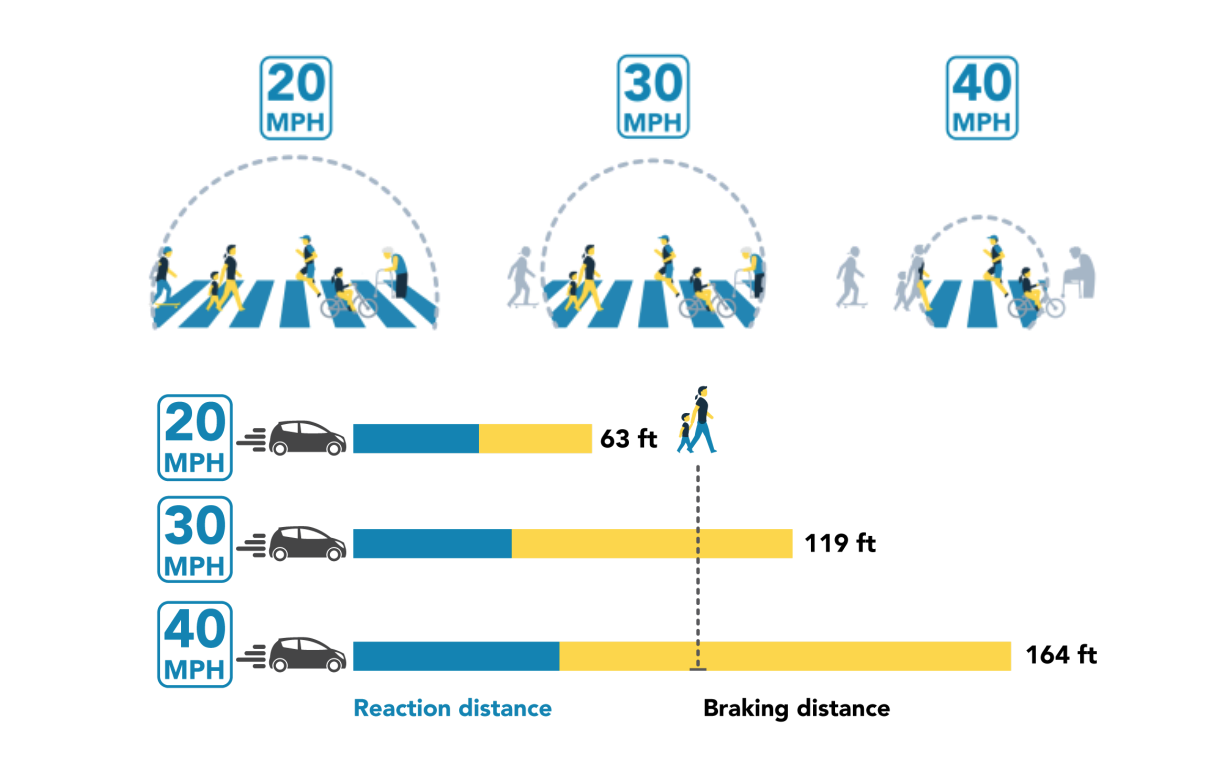
Installing traffic calming measures also improved safety for everyone on the road. These targeted design changes–such as curb extensions, raised crosswalks, and speed humps–successfully slow down vehicles and enhance pedestrian visibility. In an evaluation of 11 neighborhood-wide traffic calming projects, injury crashes fell by 45% as compared to 18% on similar streets without traffic calming. The data shows that simple, street-level improvements are an effective way to improve quality of life.
“Every street project is a safety project,” said Chris Osgood, Interim Chief of Streets. “This update provides perspective on where we have made progress and identifies critical strategies that will help our community reach our Vision Zero goal.”
“Vision Zero is a public health intervention because access to safe and diverse transportation options is a key social driver of health,” said Dr. Bisola Ojikutu, Commissioner of Public Health for the City of Boston. “Along with reducing injuries and death, safe streets impact access to medical care, food, education and employment; support residents to be physically active; and create opportunities for people to be more connected to their neighbors. This plan is part of our shared commitment to building a healthier city for all, and Boston Public Health Commission is proud to keep working alongside the Streets Cabinet to support Vision Zero’s goals.”
Despite overall progress, the report identifies critical areas requiring focused attention. Pedestrian fatalities trended downward between 2017 and 2023 and declined during the COVID-19 pandemic, but began rising again in 2024. While pedestrians are involved in 16% of injury crashes, they account for over 70% of traffic fatalities. Across all travel modes, these citywide trends in both injury crashes and fatalities reflect many factors, including emerging vehicle technologies and changing travel patterns in the aftermath of the COVID-19 pandemic. For example, more foot traffic downtown or a higher volume of commuters in key areas of the city can increase exposure and therefore the chance of a crash occurring.
The data also reveals disproportionate impacts on more vulnerable populations. Residents aged 65 and older make up 13% of Boston’s population but account for 32% of pedestrian fatal crashes. From 2021 through 2025, Boston EMS responded to an average of one crash per week involving a child walking, and every two weeks for crashes involving a child biking. Children make up 13% of Boston residents and were involved in 10% of pedestrian injury crashes and 2 of the 41 fatal pedestrian crashes.
Vision Zero crash data is publicly accessible and posted online, currently updated through October 2026. At the conclusion of every month, crash data is reviewed and verified by EMS and posted on Boston.gov before the end of the following month. The dataset includes the date, time, location, and type of crash for crashes requiring a public safety response which may involve injuries or fatalities.
These findings reinforce the need for targeted investments to protect the most vulnerable road users and continue advancing the City’s commitment to eliminating traffic deaths and serious injuries. The 2026 Vision Zero Action Plan update establishes a framework for the City’s next phase in this work.
To view the full report and learn more about Boston’s Vision Zero initiatives, please visit boston.gov/vision-zero.